
Designed an enterprise climate risk assessment platform that enables analysts to assess physical and transition climate risks across assets and regions.The platform translates complex climate and ESG data into structured insights using scenario analysis, uncertainty indicators, and risk scores.It supports regulatory reporting and strategic decision-making through clear workflows and visualizations. The experience is optimized for accuracy, transparency, and analyst efficiency.
Check out Figma Mockups →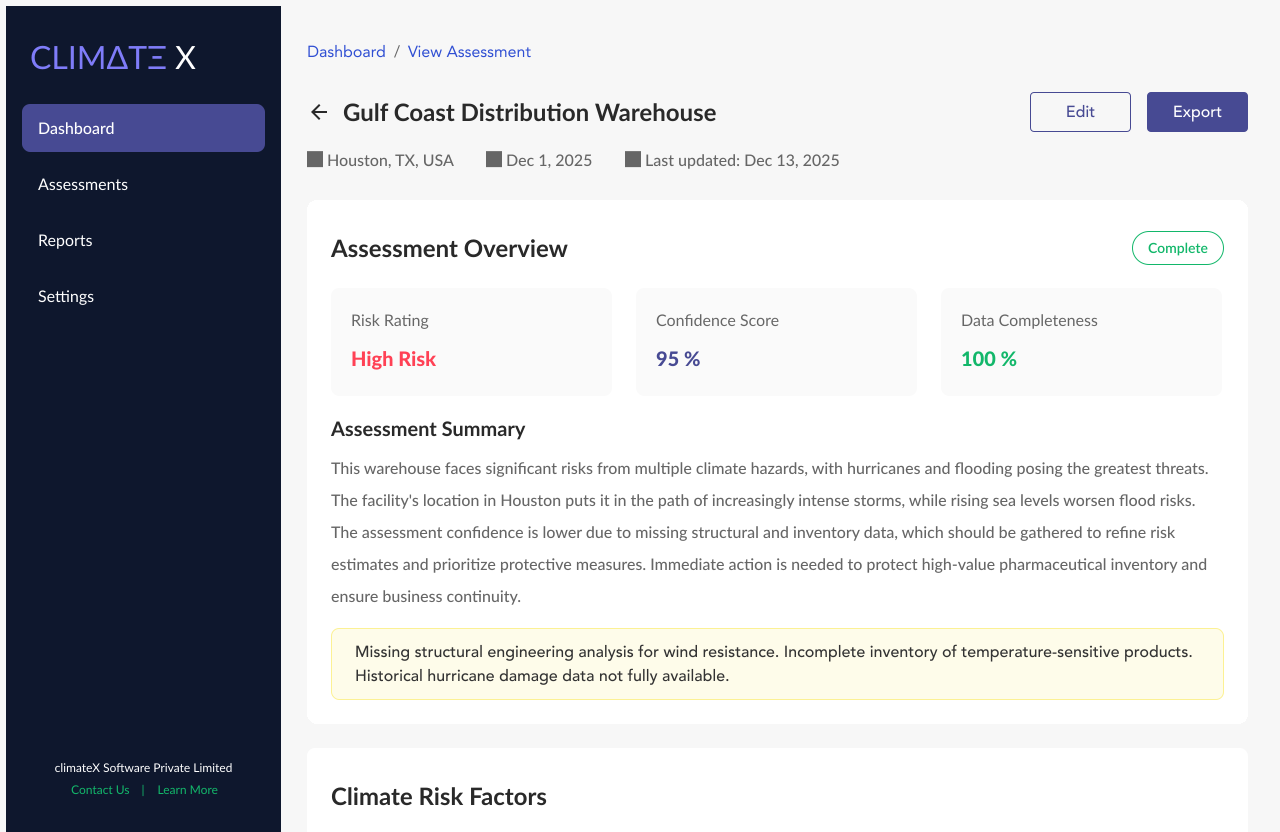
UX/UI strategies designed to translate complex climate and ESG data into transparent, decision-ready risk assessments.
Figma, Sketch, Notion
3 days approx.
Large enterprises today face increasing exposure to climate-related physical risks, such as floods, heatwaves, storms, and rising sea levels, which can disrupt operations, damage critical assets, and impact financial performance.Risk and sustainability teams are responsible for understanding these threats and communicating them clearly to stakeholders, such as business leadership, operations, and audit committees. However, today, the existing tools for physical climate risk assessment are often complex, fragmented, require deep climate-science expertise, and have inconsistent data entry and non-standardised outputs.This results in slow turnaround, high cognitive load, and limited confidence in results.
So, this project aims to design a small but high-impact slice of a B2B climate risk assessment platform that enables teams to run Physical Climate Risk Assessments for their assets, such as facilities, warehouses, plants, and branches and generate decision-ready outputs without dependency on technical specialists, enabling actionable mitigation planning and reporting.
Who are your users and what’s bothering them?
A Senior Risk Analyst based in Houston, Texas, working at a sustainability tech company, bringing 15–20 years of expertise in ESG, operational risk, and compliance, responsible for evaluating climate-related risks across company assets and communicating the findings to leadership, operations, and audit teams.
User Needs
→ Conduct Physical Climate Risk Assessments quickly & consistently across assets without much manual effort.
→ Prepare risk summaries and dashboards for leadership, audit, and operations.
→ Trust and explain results with clarity, supported by transparent data.
→ Identify what drives the risk and understand the recommended next steps.
Pain Points
→ Fragmented data sources and manual compilation.
→ High cognitive load due to complex climate models (too technical, requiring climate expertise) and jargon.
→ Inconsistent assessment formats across teams.
→ Difficulty explaining risk drivers to non-technical stakeholders.
→ Lack of transparency leaves leadership questioning, “How was this score calculated?”

Opportunity
→ Design a streamlined, decision-ready workflow that guides users from asset input to risk insights, enabling -
* Faster assessments
* Higher transparency
* More confident business decisions
What do we believe to be true before designing?
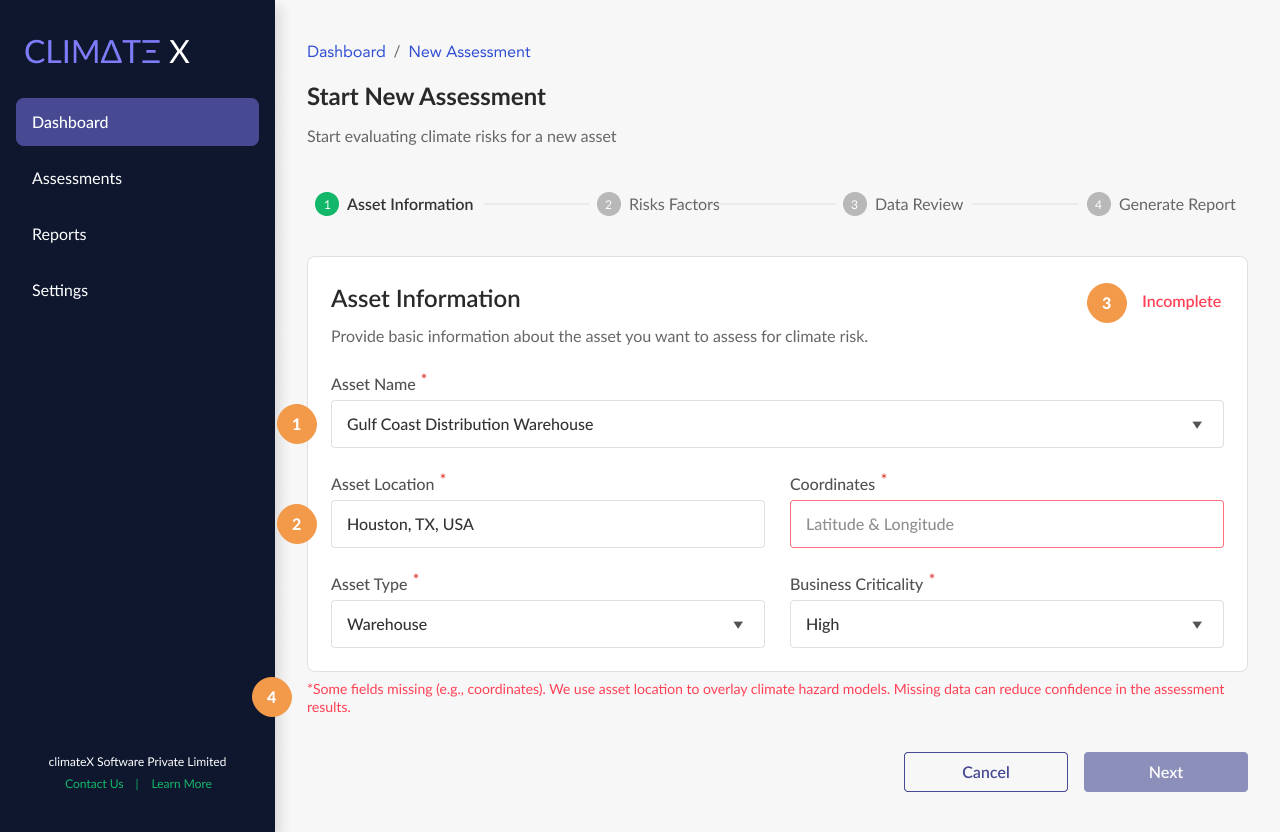
Enable the risk analyst to quickly select an existing asset and auto-populate core asset information from the asset registry, reducing manual data entry, errors, and time to assessment start.This screen establishes data readiness and ensures the assessment is based on a single source of truth.
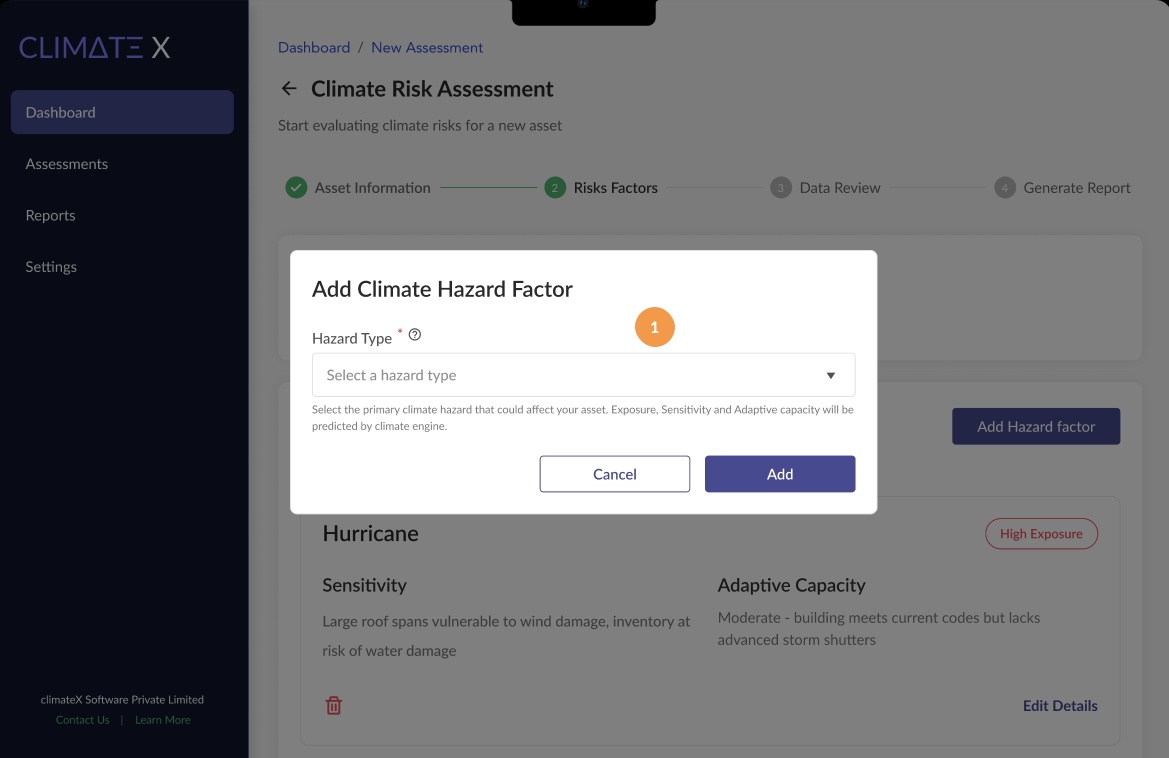
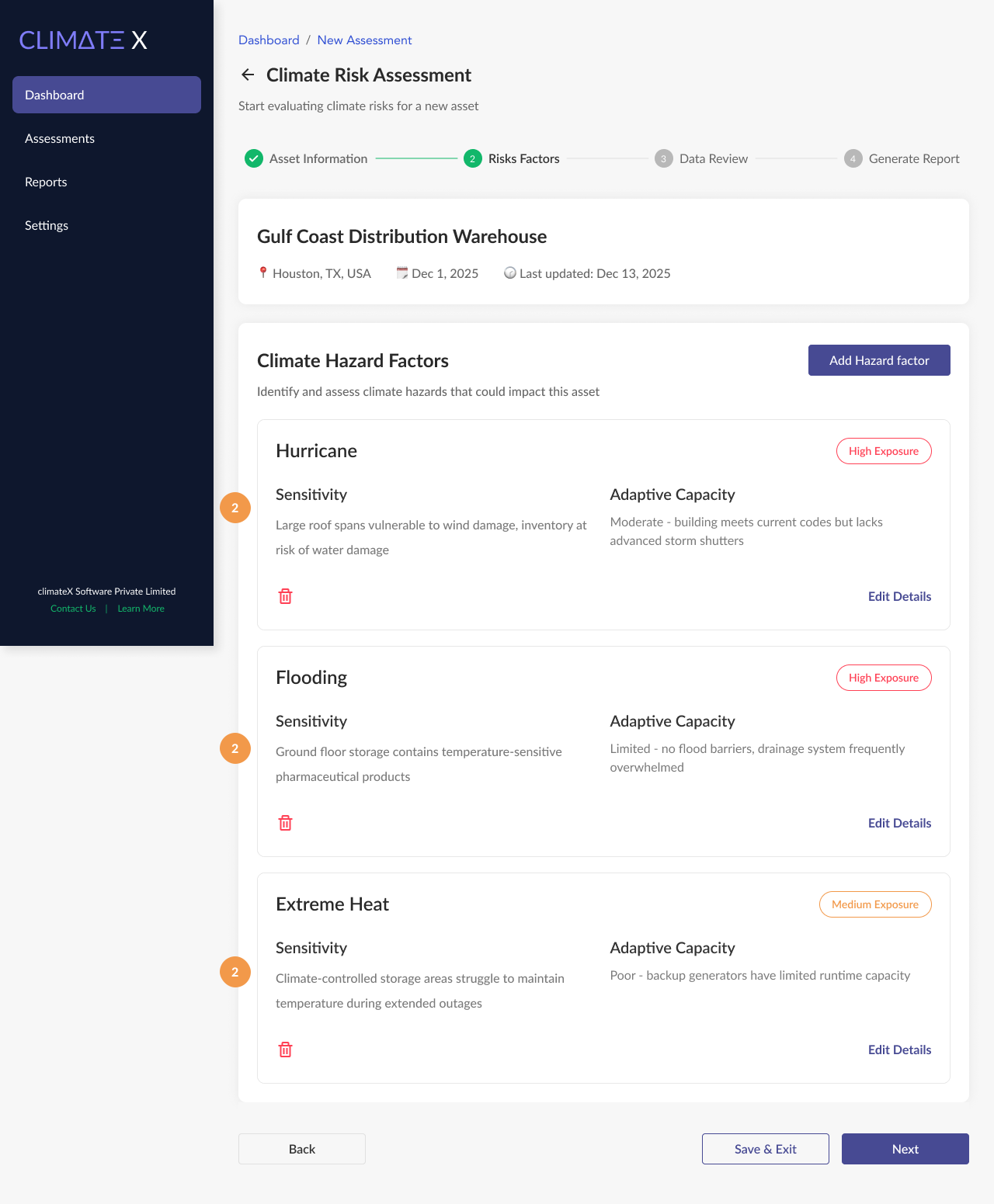
Enable the user to select which physical climate hazards are relevant for the chosen assets, while the climate engine predicts the smart defaults and reduces decision fatigue. This screen ensures the assessment focuses only on material risks, improving both accuracy and interpretability of results.
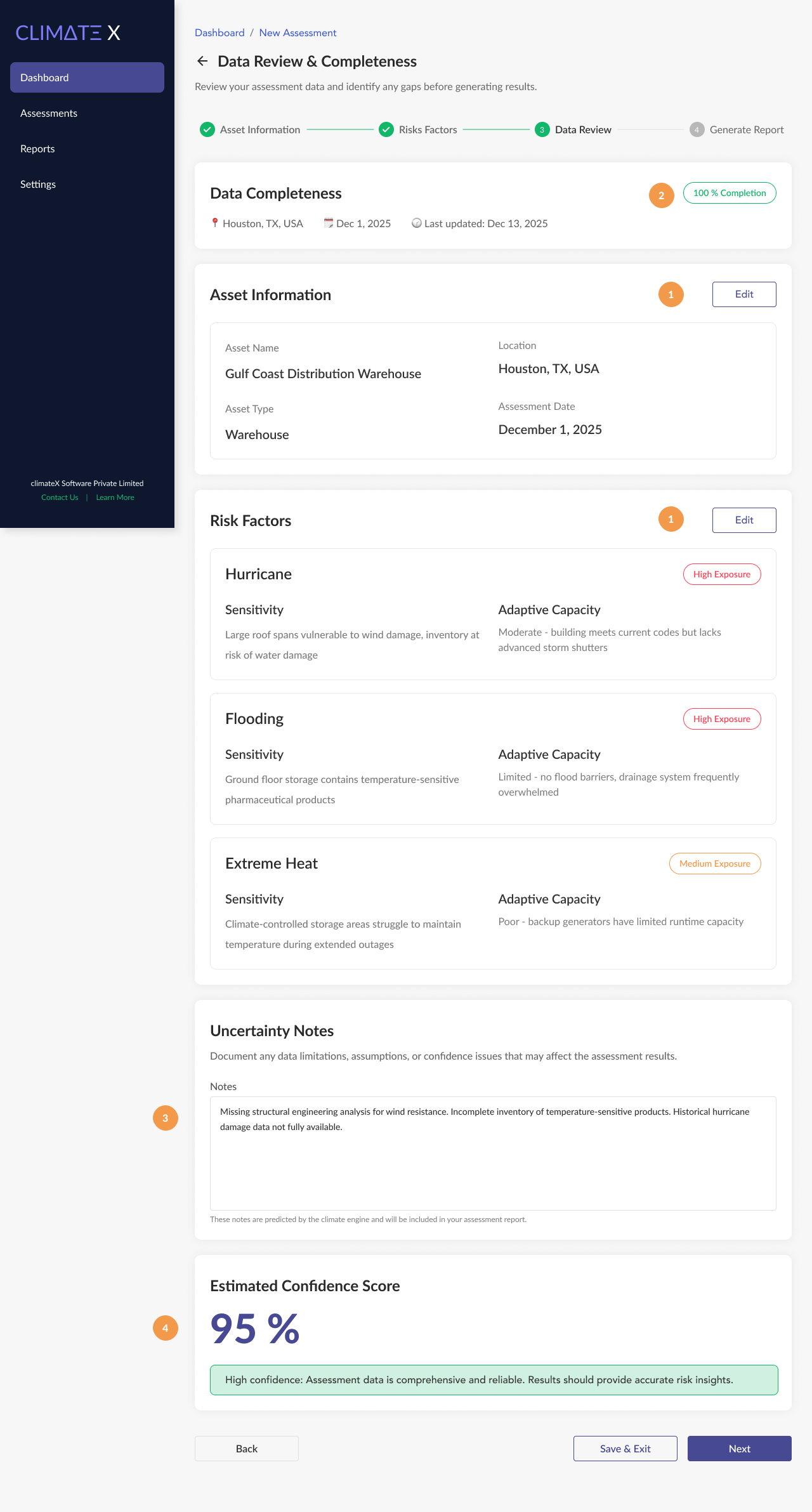
To help the user verify, understand, and resolve data gaps before running the physical climate risk assessment, ensuring outputs are credible, explainable, and decision-ready.This screen builds trust by making data quality and uncertainty explicit, without forcing the user to fix everything.
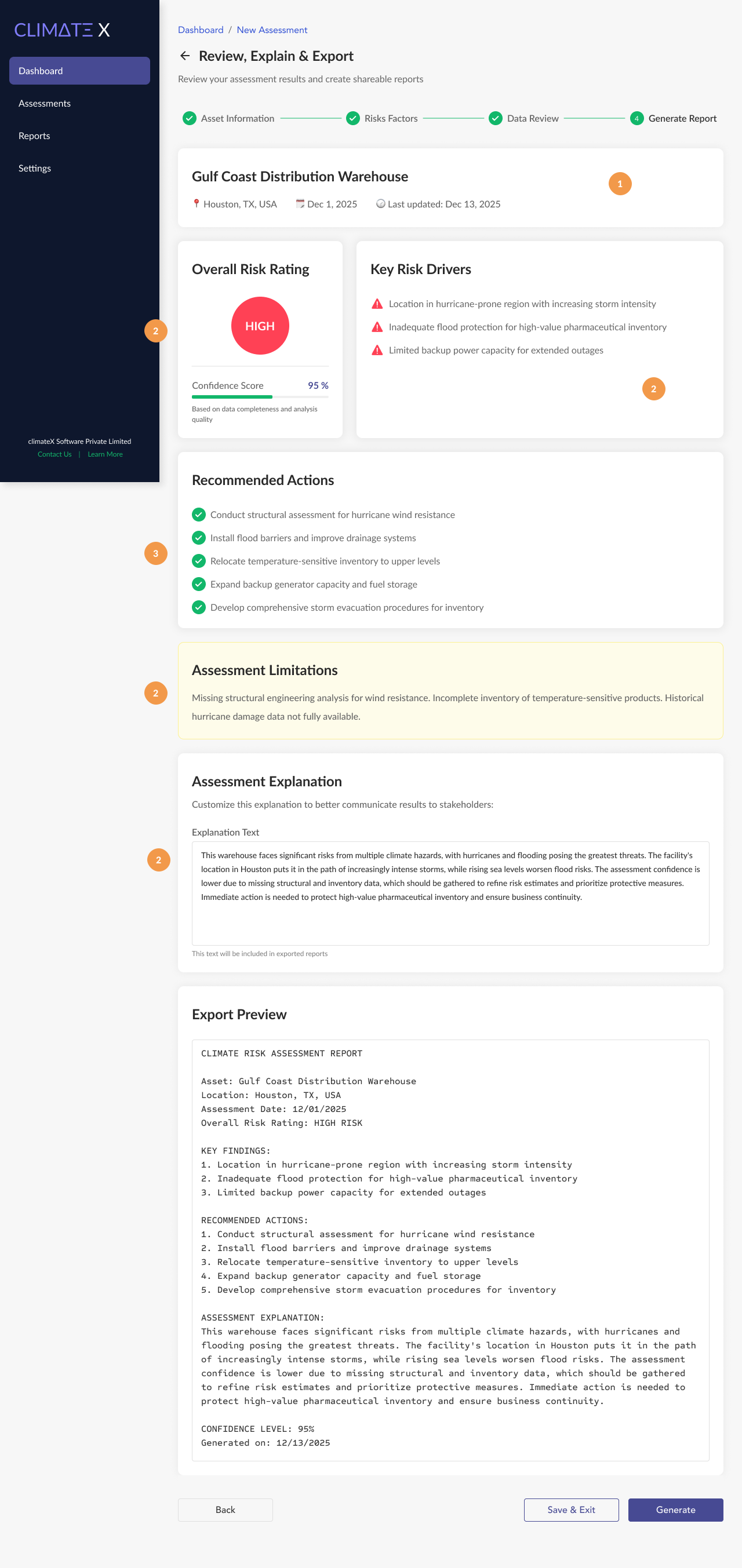
Enable the risk analyst to understand, trust, and communicate the physical climate risk results without needing additional analysis support.This screen translates model outputs into decision-ready insights that can be shared with leadership, operations, and auditors.
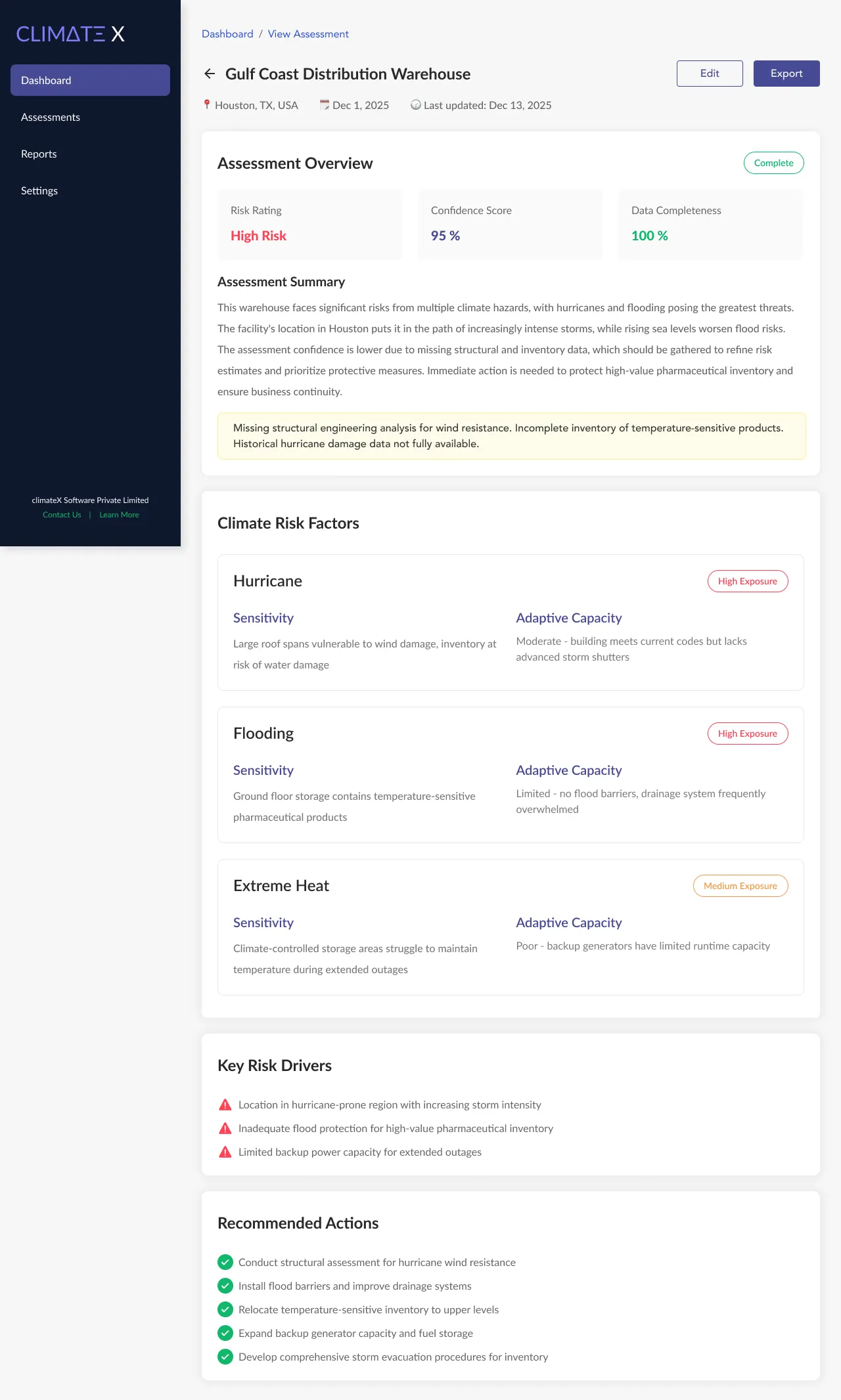
This screen answers: How risky is this asset? Why is it risky? What should we do next?